
Table of Contents
- Why Are RAM Prices So High Right Now?
- It's Not Just RAM: How AI Is Pushing Up Hardware Prices Across Your Business
- Why Can't Manufacturers Just Make More Memory?
- How Long Will High RAM and Hardware Prices Last?
- What Rising Hardware Costs Mean for Your IT Budget
- How to Manage Rising IT Hardware Costs Right Now
- Watch: The Memory Crisis Explained
- FAQs
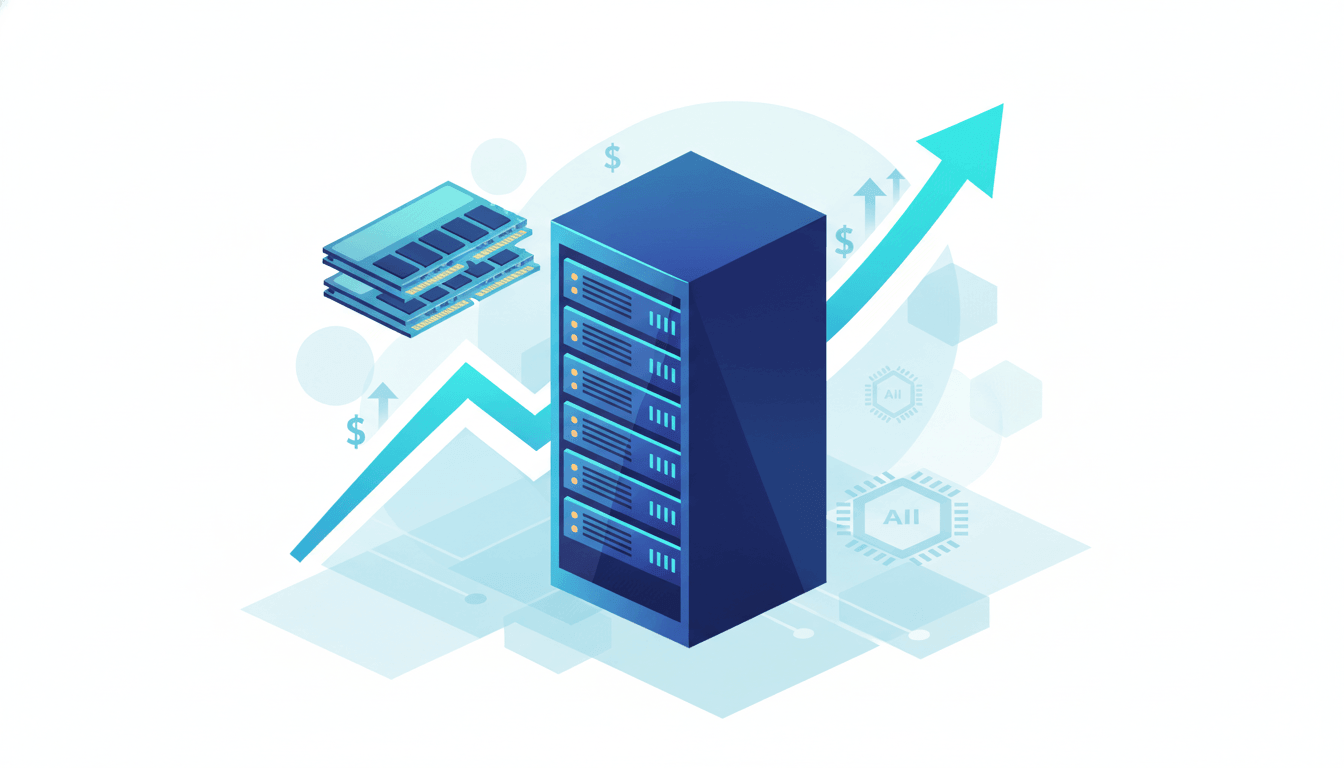
If you've priced out new laptops, a server refresh, or even a simple RAM upgrade for your office recently, you've probably done a double take at the quote. You're not imagining it. Why are RAM prices so high right now? The short answer is artificial intelligence: AI data centers are buying up so much memory and storage capacity that there's less left over for everyone else, and the ripple effects are showing up in the cost of nearly every piece of IT hardware a business buys.
This isn't a temporary blip you can wait out with a delayed purchase order. It's a structural shift in how computer memory and storage get made and sold, and it's already changing what business owners should budget for hardware in the next two to three years.
Key Takeaways
- AI data centers are consuming a dominant share of global memory (RAM) and storage manufacturing capacity, driving consumer and business-grade prices up as much as 400-500% in some categories over the past year.
- The price spike isn't limited to RAM. Laptops, servers, SSDs, and networking gear are all affected because they draw on the same chip and memory supply chain.
- Manufacturers aren't rushing to fix the shortage. Building new memory factories takes years and billions of dollars, and AI contracts are far more profitable than consumer sales.
- Analysts don't expect meaningful relief until 2027 at the earliest, with some forecasts pushing that out to 2030.
- Businesses can soften the impact with better asset tracking, extended refresh cycles, and working with a managed IT partner to time purchases strategically.
Why Are RAM Prices So High Right Now?
Why are RAM prices so high? Memory manufacturers, primarily Samsung, SK Hynix, and Micron, have shifted their production priorities toward High-Bandwidth Memory (HBM) and large-capacity server memory built for AI data centers. That kind of memory is far more profitable than standard consumer or business-grade RAM, and it uses the same raw silicon wafers. Every wafer devoted to an AI chip is a wafer not used to build the memory sticks going into your office PCs.
The scale of the shift is dramatic. A 16GB DDR5 memory kit that cost under $100 in early 2025 now regularly sells for $400 or more. Some high-capacity DDR5 kits have gone up by 400% to 500% in a single year. Micron has reported gross margins near 85%, and SK Hynix posted an operating profit increase of more than 550% year-over-year, largely on the strength of AI-driven memory contracts.
Compounding the problem, manufacturers are simultaneously winding down production of older DDR4 memory to focus on DDR5 and AI-grade memory. Millions of business systems still run on DDR4, and that dwindling supply is pushing its price up even faster than DDR5 in percentage terms.
What makes this genuinely unusual, rather than just another supply chain headache, is the history. Memory prices have fallen consistently, decade after decade, since the technology was invented in the 1960s. Businesses have always been able to count on more storage and more RAM costing less over time, not more. That trend has effectively reversed in the space of about 18 months, and it's the AI buildout, not inflation, tariffs, or a temporary factory disruption, that's responsible.
It's Not Just RAM: How AI Is Pushing Up Hardware Prices Across Your Business
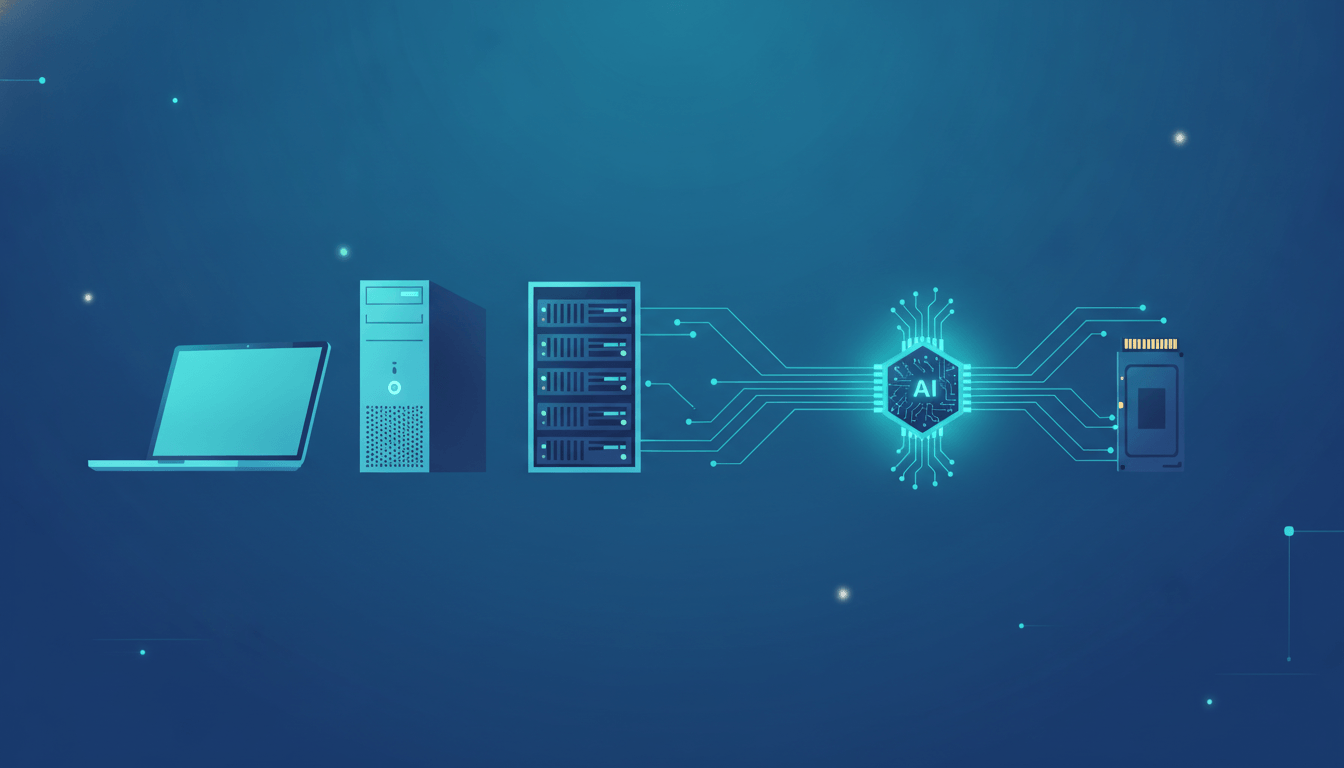
RAM is the most visible casualty of the AI buildout, but it's far from the only one. Laptops, desktops, servers, and networking equipment all draw components from the same strained supply chain, and manufacturers are passing the added cost straight to buyers.
A few examples of how this is showing up beyond your memory budget:
- Laptops and desktops: Device makers are absorbing higher memory and storage costs, and several major manufacturers have already raised retail prices on new models rather than eat the margin hit.
- Solid-state drives: NAND flash storage, used in SSDs, competes for the same fabrication capacity as RAM. Storage upgrades that used to be a minor line item are now a meaningful cost.
- Servers: Business servers typically ship with far more RAM than a desktop, so a server refresh or expansion is hit proportionally harder than a single workstation purchase.
- GPU-equipped workstations: Even AI-accelerated hardware built for businesses, not just data centers, is getting pricier as memory eats a larger share of the bill of materials. Industry estimates suggest server GPU pricing could climb another 15-20% over the next year on memory costs alone.
Put simply: gaming PCs, workstations, laptops, servers, and full-scale AI clusters are all pulling from the same limited memory supply. Your next hardware purchase, whatever category it falls into, is competing with billion-dollar AI infrastructure deals for the same components. Even Apple, a company with enormous purchasing leverage, has already raised prices on several products to absorb the higher cost of memory and storage.
Why Can't Manufacturers Just Make More Memory?
Why are RAM prices so high? Why can't we just manufacturer more memory? It's a fair question, and the honest answer is that it's both physically difficult and financially unappealing for the companies that could do it.
Building a new memory fabrication plant requires a multi-year construction timeline, billions of dollars in investment, and precision clean-room environments that can't be assembled quickly. SK Hynix, for example, has committed over $38 billion to build two new memory factories in South Korea, with production not expected to start before 2029.
There's also a hard physical constraint working against a quick fix. Micron's own leadership has said that a single unit of the high-bandwidth memory used in AI servers consumes roughly three times the raw silicon wafer supply that a standard DDR5 module does. Every wafer redirected to AI memory is, by that math, three DDR5 modules that never reach the business and consumer market. Expanding wafer capacity fast enough to offset that isn't something a factory can do overnight, even with unlimited money.
There's also little incentive to rush. AI hyperscalers are paying premium prices for guaranteed supply years in advance, and manufacturers have openly prioritized those contracts over the retail and business channel. Micron discontinued its consumer-facing Crucial memory brand at the end of 2025 specifically to redirect capacity toward larger, more strategic AI customers, and its profit margins since then make it easy to see why.
How Long Will High RAM and Hardware Prices Last?
Nobody can say for certain, but the people running the memory factories aren't predicting a quick fix. In a Reuters interview, SK Hynix's CEO said the memory supply shortage is expected to worsen through 2027, with demand continuing to outstrip supply well beyond 2030. Micron's leadership has echoed that outlook, telling investors to expect tight supply conditions to persist beyond 2027.
Deloitte's analysis is similarly cautious, suggesting meaningful relief is unlikely before 2030. If you want to track prices in real time, sites like PCPartPicker's memory price trends show just how steep and sustained the climb has been over the past 18 months.
Why are ram prices so high? The one wildcard is the AI investment cycle itself. If AI spending slows or the current buildout cools faster than expected, memory prices could fall relatively quickly, since a large share of the shortage is driven by speculative capacity reservations rather than only physical scarcity. That's not something a business can plan around, though. It's a possibility, not a strategy.
What Rising Hardware Costs Mean for Your IT Budget
For an SMB, this isn't an abstract industry trend. It shows up directly in the numbers the next time you need to replace aging workstations, add a server, or expand your team.
A law firm that budgeted $1,200 per workstation for a planned refresh eighteen months ago could easily be looking at $1,600 to $1,800 for the same specs today, with memory and storage accounting for most of the increase. A server upgrade that once ran a few thousand dollars in added RAM can now cost two to three times that, simply because server-grade memory sits at the front of the line for AI-driven demand.
The same pressure shows up at hiring time. A dental office or real estate brokerage bringing on three new employees this quarter now needs a noticeably larger equipment line item than it did a year ago, even if it's buying the exact same model laptops it always has. Multiply that across a full year of hiring and normal attrition replacements, and the gap between last year's IT budget and this year's real costs can be substantial.
If your business budgets IT hardware the same way year after year, without adjusting for this shift, you're going to hit an unpleasant surprise at renewal or replacement time. Hardware refresh cycles, lease renewals, and new-hire equipment budgets all deserve a second look given how quickly the underlying costs have moved.

How to Manage Rising IT Hardware Costs Right Now
You can't control the memory market, and waiting for it to correct isn't a plan your business can operate on for the next two or three years. What you can control is how deliberately you respond to it. A few practical moves make a real difference:
- Audit before you buy. Know exactly what hardware you own, its age, and its remaining useful life before committing to new purchases. Good IT asset management practices often reveal underused equipment that can be redeployed instead of replaced.
- Extend refresh cycles where it's safe to do so. A five-year-old workstation that's still meeting a role's needs doesn't need to be replaced on a rigid schedule just because that's how it's always been done.
- Consider certified refurbished or off-lease equipment. For roles that don't need the newest specs, certified pre-owned business hardware can meaningfully reduce the hit from current memory and storage prices.
- Right-size new purchases. Don't over-spec RAM or storage for a role that doesn't need it. Every extra gigabyte costs more today than it did a year ago.
- Time large purchases deliberately. Bulk buying ahead of a known price increase, or spacing out a fleet refresh instead of doing it all at once, can smooth out the budget impact.
- Lean on your managed IT provider for planning. An MSP that tracks hardware lifecycles across your whole environment can flag upcoming replacement needs early, giving you more room to shop, negotiate, or phase purchases before you're forced into an urgent, full-price buy.
None of these moves make hardware cheap again. What they do is put your business back in control of when and how you absorb the cost, instead of getting hit with it all at once during a stressful, unplanned replacement.
Watch: The Memory Crisis Explained
Why are ram prices so high in our current economic environment? For a concise breakdown of how the AI-driven memory shortage happened and what analysts expect next, this explainer is worth five minutes of your time:
If your business is facing a hardware refresh, a server upgrade, or you're simply unsure how the current market should change your IT budget, TechWorks can help you build a plan that accounts for it. Our team tracks these trends across every client environment we manage, and we can walk through your specific hardware roadmap and where the real cost pressure will land. Related reading: our guide to what managed IT services pricing actually includes, and our earlier look at practical ways to cope with rising IT costs, both worth a read if this trend has you rethinking your budget.
FAQs
Will RAM and hardware prices go back down soon?
Not likely in the near term. SK Hynix's CEO has said the memory shortage is expected to worsen through 2027, with demand outstripping supply well beyond 2030 according to some forecasts. The main wildcard is the AI investment cycle itself: if AI spending cools faster than expected, prices could fall relatively quickly, but that isn't something a business can plan around.
Why are RAM prices suddenly so expensive?
Memory manufacturers have shifted production toward high-bandwidth memory and large-capacity server RAM built for AI data centers, since it's far more profitable than standard consumer and business-grade memory. That leaves less manufacturing capacity for the RAM that goes into everyday laptops, desktops, and servers, which is pushing prices up sharply.
Is this just a RAM problem, or will it affect other IT hardware too?
It goes well beyond RAM. Laptops, desktops, servers, SSDs, and even AI-accelerated workstations all draw on the same strained memory and chip supply chain, so their prices are rising too. Several device makers have already raised retail prices to absorb the higher component costs.
Should my business delay hardware purchases and wait for prices to drop?
For most businesses, no. Analysts don't expect meaningful relief until at least 2027, and possibly not until 2030, so an open-ended wait usually isn't practical. A better approach is auditing what you already own, extending refresh cycles where it's safe to do so, and timing necessary purchases deliberately instead of putting them off indefinitely.
How can a managed IT provider help control rising hardware costs?
A managed IT provider tracks the age and condition of every device across your environment, so it can flag upcoming replacement needs early instead of forcing an urgent, full-price purchase. That extra lead time gives your business room to shop around, consider certified refurbished options, or phase a larger refresh instead of absorbing it all at once.